Tank pump-outs
Septic tank pumping in Howell County
A conventional septic tank should be pumped every three to five years, and around West Plains the price runs about $250 to $600 for a normal job, more if the ground fights you. The tank collects the solids that settle out of your household wastewater, and pumping is simply emptying that buildup before it overflows into the drain field and ruins it. Call the number on this page and you reach a licensed local contractor who pumps tanks across the county and knows the rocky ground here. This page explains how often yours needs it, the signs it is due, and what pushes the bill up.
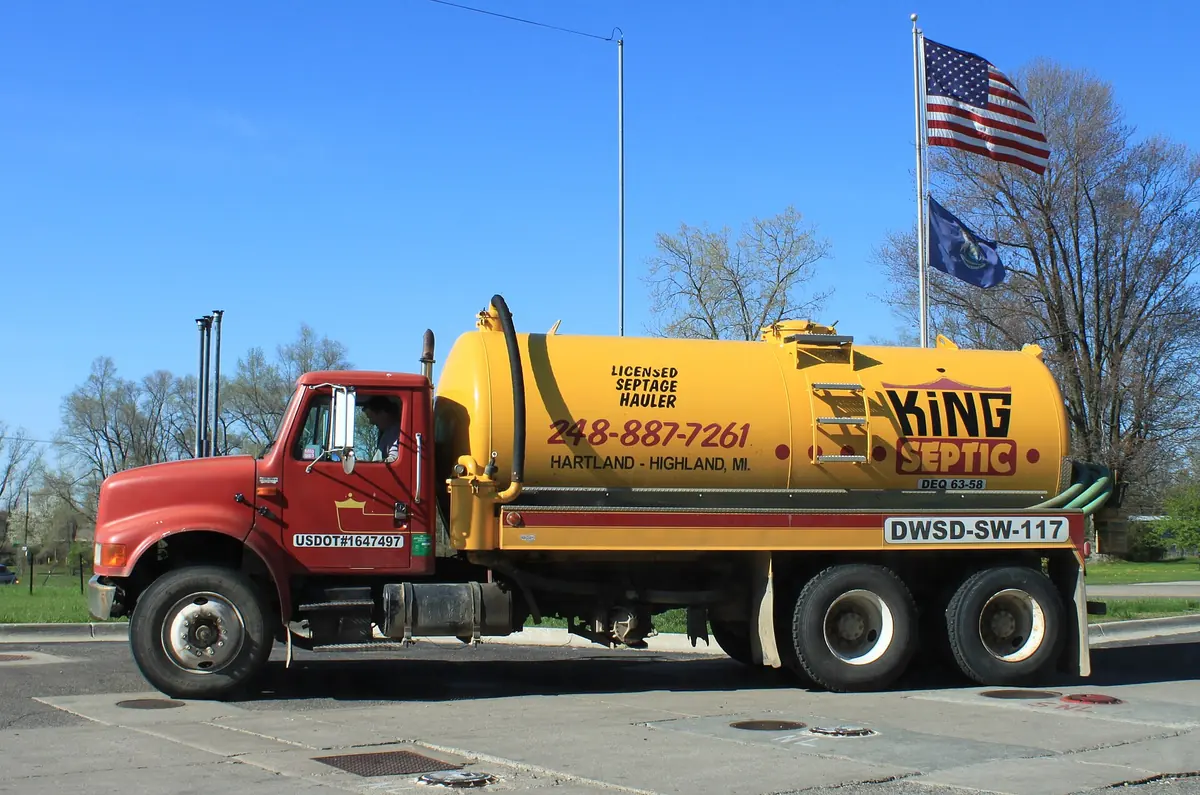
How often a tank needs pumping
Three to five years is the honest answer for most households, but the real number depends on how many people live over the tank and how big the tank is. A full house on a small tank fills it faster than a couple on a large one, so a family of five on a 750 gallon tank might be closer to every two or three years while a retired couple on a 1,500 gallon tank can stretch toward the long end. The calendar is only a guess. What actually decides it is the sludge and scum level in the tank, which is why a contractor measures it rather than pumping on a fixed schedule for its own sake.
Two situations out here shift the schedule. Seasonal cabins and weekend places along the river country sit empty for weeks and then take the whole family at once, which is hard on a tank in bursts and worth watching more closely than steady use would be. And a working farm with a bunkhouse, extra dwelling, or heavy laundry load runs a tank down faster than the household count alone suggests. When in doubt, pumping a year early is cheap insurance next to replacing a drain field.
What the job actually involves
The visit is straightforward when the tank is easy to reach. The contractor locates the tank, digs down to the access lid if it is buried, opens it, and runs the truck's hose in to pump out the liquid, the floating scum, and the settled sludge until the tank is empty. A good operator will also glance at the baffles or tees and the inlet and outlet while the lid is open, because that is the one moment the inside of the tank is visible without extra digging. If something looks off, like a broken baffle or a lid that is starting to cave, that is the time to catch it. The repair page covers the fixes that turn up during a pump.
The whole thing is usually an hour or two of work once the lid is open. Reaching the lid is the part that varies, and in this county it varies a lot.
Not sure when yours was last pumped? Describe your place on the phone and get a straight answer.
What raises the price
The base price covers a standard tank with the lid within easy reach. Everything that pushes a job toward the top of the range, or into the $500 to $800 and up bracket, comes down to a handful of local realities.
Rocky chert access
This is the biggest one here by far. South-central Missouri sits on rocky chert soil over shallow bedrock, and a tank lid buried under a foot of that is real digging before any pumping starts. The same tank that would be a quick pump on soft flat ground becomes a dig-first job in the Ozarks, and that labor is most of what separates a $300 pump from a $700 one.
Buried lids, and risers as the fix
A lot of older systems here have lids buried well below grade, sometimes with no marker left to say where. Finding and uncovering that lid eats time on every single visit. The permanent fix is a riser, a short collar that brings the access lid up to ground level. It costs something to install once, then it makes every future pump quick and cheap because nobody has to dig. If your lid is buried, ask about a riser while the hole is already open.
Heavy sludge from long neglect
A tank pumped on schedule empties easily. A tank nobody has touched in eight or ten years is packed with hardened, compacted sludge that takes longer to break up and haul, and it is far more likely to turn up a problem while the truck is there. On schedule is always the cheaper path.
Tank size and distance
A bigger tank simply holds more to empty and haul, so it costs more. And Howell County is spread out. A place out toward the county line or down in the river bottoms is a longer haul for the truck than a lot in town, so the far-out jobs get planned around drive time. Distance rarely sets the price by itself, but it factors in. The cost page breaks all of this down, and the Mountain View area page covers the remote-property side of it.
Warning signs your tank is due
A tank rarely fails without warning. The signs build slowly, and catching them early is the difference between a routine pump and a backup in the house. Watch for these.
- Slow drains throughout the house, not just one fixture, which points to the tank rather than a single clogged line.
- Gurgling from drains or toilets as air struggles past a tank that is filling up.
- Odor around the tank, the drains, or the yard, which is never normal for a working system.
- Wet spots or soggy ground over the tank or drain field even when it has not rained.
- Lush, bright green grass in a stripe or patch over the field, which means effluent is surfacing and feeding it.
Any one of these is worth a phone call. Several together mean it is time now, before a slow problem becomes a sewage backup that is far more expensive to clean up than a pump would have been.
What pumping does not fix
Pumping empties the tank. It does not repair a drain field that has already failed. If the lateral field, the network of buried perforated lines that lets treated water soak into the ground, has clogged or collapsed, pumping the tank buys a little time but does not solve anything, and the tank fills right back up because the water has nowhere to go. A failed field is a bigger job that a pumping contractor will diagnose honestly and tell you about, but replacing one is separate high-dollar work that involves the county and often a system designer. This site is about keeping a working system working, not new installs. An honest contractor will tell you the difference rather than selling you a pump that will not help.
Pumping questions
How do I know if I have a tank or a lagoon?
If you have a buried tank and a drain field, you are on a conventional system and this page is for you. If instead you have a small fenced earthen basin sitting down away from the house, that is a lagoon, and it is serviced differently. Plenty of rural places here are on lagoons because the rock and clay drain poorly. The lagoon service page covers those, and a contractor can confirm which you have in one visit.
Can I just wait until there is a backup?
You can, but it is the most expensive way to run a septic system. A backup means sewage in the house or surfacing in the yard, a cleanup, and a much higher chance that solids have already pushed into the drain field and started ruining it. Pumping on schedule costs a few hundred dollars. Replacing a field that solids destroyed runs into the thousands. On schedule wins every time.
Should I add a septic additive instead of pumping?
No. The tank still fills with solids no matter what you pour in, and additives do not remove them. Some harsh ones can even push solids into the drain field and shorten its life. The only thing that empties a tank is pumping it. Save the money and put it toward a pump on schedule.
How long does a pump-out take?
Once the lid is open, usually an hour or two. The variable out here is reaching the lid. A lid at grade near the drive is quick. A lid buried under a foot of chert on a slope is real digging first, which is exactly why a riser pays for itself on a property that gets pumped every few years.
Do the contractors cover my area?
Yes. The contractors reached through this site work West Plains and out across Howell County, including the farms, cabins, and acreage between towns. Long gravel drives and rocky access are the norm here and planned into the visit. See the West Plains area page for the local coverage.
Get connected with a licensed local septic contractor.